The Everest Ii Realism Continued Access
EVEREST II REALISM - A Continued Access Study To Evaluate The Safety And Effectiveness Of The Mitra. Clip® Device: Demographics And Procedural Outcomes Laura Mauri, M. D. , M. Sc. On behalf of the EVEREST II REALISM investigators 1
Disclosures - Laura Mauri, M. D. , M. Sc. • Research grants from Abbott, Boston Scientific, Cordis, Medtronic, Eli Lilly, Daiichi Sankyo, Bristol-Myers Squibb, Biotronik, and Sanofi-Aventis • Consulting Medtronic, Eli Lilly, Biotronik, Re. Cor, St. Jude 2
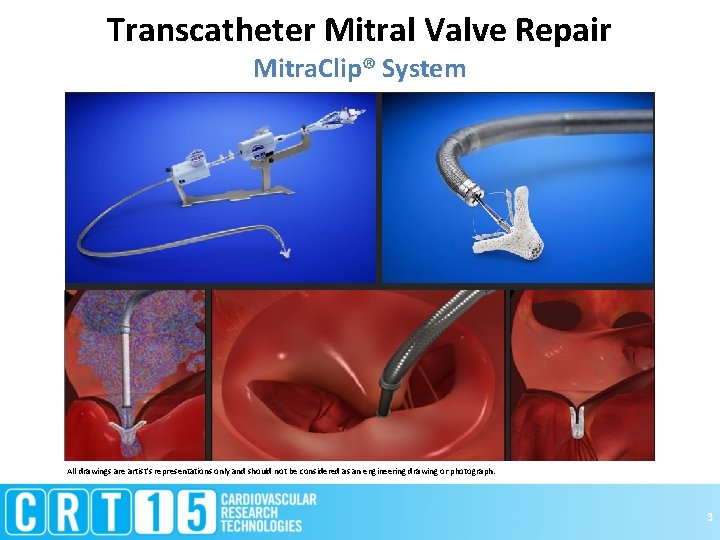
Transcatheter Mitral Valve Repair Mitra. Clip® System All drawings are artist's representations only and should not be considered as an engineering drawing or photograph. 3
Mitra. Clip Therapy Worldwide Experience • More than 20, 000 patients have been treated with the Mitra. Clip device worldwide • In 2008, Mitra. Clip received CE mark for reconstruction of the insufficient MV through tissue approximation • In 2013, FDA approved Mitra. Clip for treating significant symptomatic degenerative mitral regurgitation (DMR) in patients who have been determined to be at prohibitive risk for MV surgery by a heart team Data as of February 6, 2015. Source: Abbott Vascular 4
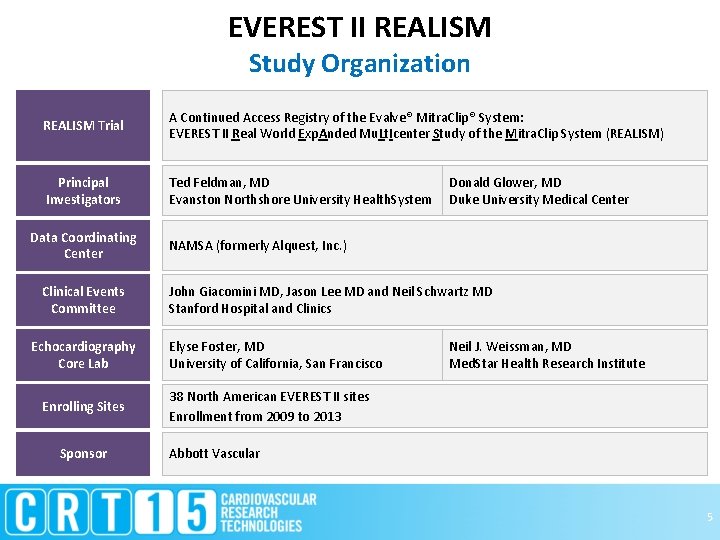
EVEREST II REALISM Study Organization REALISM Trial A Continued Access Registry of the Evalve® Mitra. Clip® System: EVEREST II Real World Exp. Anded Mu. Lt. Icenter Study of the Mitra. Clip System (REALISM) Principal Investigators Ted Feldman, MD Evanston Northshore University Health. System Data Coordinating Center Clinical Events Committee Echocardiography Core Lab Enrolling Sites Sponsor Donald Glower, MD Duke University Medical Center NAMSA (formerly Alquest, Inc. ) John Giacomini MD, Jason Lee MD and Neil Schwartz MD Stanford Hospital and Clinics Elyse Foster, MD University of California, San Francisco Neil J. Weissman, MD Med. Star Health Research Institute 38 North American EVEREST II sites Enrollment from 2009 to 2013 Abbott Vascular 5
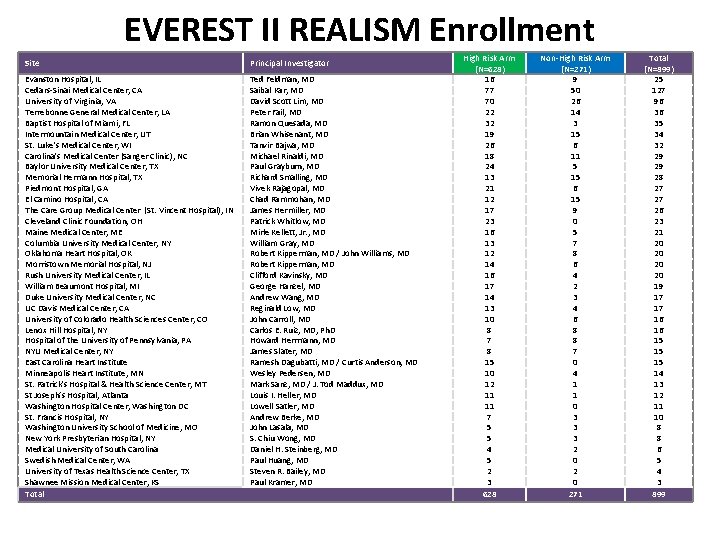
EVEREST II REALISM Enrollment Site Principal Investigator Evanston Hospital, IL Cedars-Sinai Medical Center, CA University of Virginia, VA Terrebonne General Medical Center, LA Baptist Hospital of Miami, FL Intermountain Medical Center, UT St. Luke's Medical Center, WI Carolina's Medical Center (Sanger Clinic), NC Baylor University Medical Center, TX Memorial Hermann Hospital, TX Piedmont Hospital, GA El Camino Hospital, CA The Care Group Medical Center (St. Vincent Hospital), IN Cleveland Clinic Foundation, OH Maine Medical Center, ME Columbia University Medical Center, NY Oklahoma Heart Hospital, OK Morristown Memorial Hospital, NJ Rush University Medical Center, IL William Beaumont Hospital, MI Duke University Medical Center, NC UC Davis Medical Center, CA University of Colorado Health Sciences Center, CO Lenox Hill Hospital, NY Hospital of the University of Pennsylvania, PA NYU Medical Center, NY East Carolina Heart Institute Minneapolis Heart Institute, MN St. Patrick's Hospital & Health Science Center, MT St Joseph's Hospital, Atlanta Washington Hospital Center, Washington DC St. Francis Hospital, NY Washington University School of Medicine, MO New York Presbyterian Hospital, NY Medical University of South Carolina Swedish Medical Center, WA University of Texas Health Science Center, TX Shawnee Mission Medical Center, KS Total Ted Feldman, MD Saibal Kar, MD David Scott Lim, MD Peter Fail, MD Ramon Quesada, MD Brian Whisenant, MD Tanvir Bajwa, MD Michael Rinaldi, MD Paul Grayburn, MD Richard Smalling, MD Vivek Rajagopal, MD Chad Rammohan, MD James Hermiller, MD Patrick Whitlow, MD Mirle Kellett, Jr. , MD William Gray, MD Robert Kipperman, MD / John Williams, MD Robert Kipperman, MD Clifford Kavinsky, MD George Hanzel, MD Andrew Wang, MD Reginald Low, MD John Carroll, MD Carlos E. Ruiz, MD, Ph. D Howard Herrmann, MD James Slater, MD Ramesh Dagubatti, MD / Curtis Anderson, MD Wesley Pedersen, MD Mark Sanz, MD / J. Tod Maddux, MD Louis I. Heller, MD Lowell Satler, MD Andrew Berke, MD John Lasala, MD S. Chiu Wong, MD Daniel H. Steinberg, MD Paul Huang, MD Steven R. Bailey, MD Paul Kramer, MD High Risk Arm (N=628) 16 77 70 22 32 19 26 18 24 13 21 12 17 23 16 13 12 14 16 17 14 13 10 8 7 8 15 10 12 11 11 7 5 5 4 5 2 3 628 Non-High Risk Arm (N=271) 9 50 26 14 3 15 6 11 5 15 6 15 9 0 5 7 8 6 4 2 3 4 6 8 8 7 0 4 1 1 0 3 3 3 2 0 271 Total (N=899) 25 127 96 36 35 34 32 29 29 28 27 27 26 23 21 20 20 19 17 17 16 16 15 15 15 14 13 12 11 10 8 8 6 5 4 3 899 6
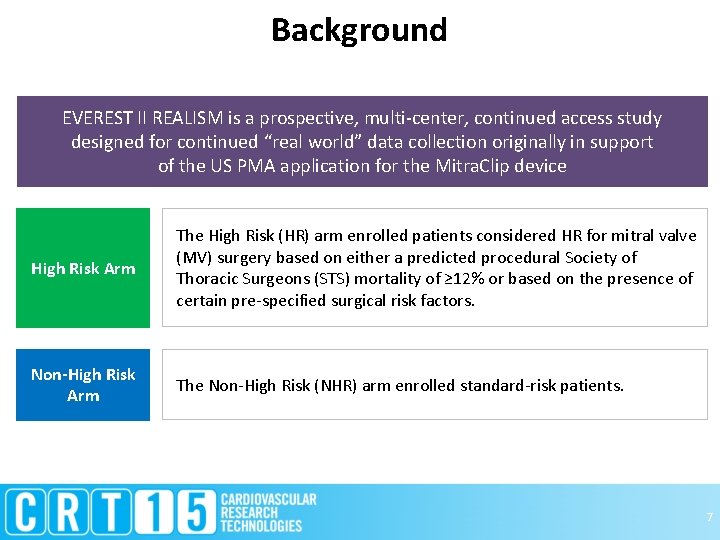
Background EVEREST II REALISM is a prospective, multi-center, continued access study designed for continued "real world" data collection originally in support of the US PMA application for the Mitra. Clip device High Risk Arm The High Risk (HR) arm enrolled patients considered HR for mitral valve (MV) surgery based on either a predicted procedural Society of Thoracic Surgeons (STS) mortality of ≥ 12% or based on the presence of certain pre-specified surgical risk factors. Non-High Risk Arm The Non-High Risk (NHR) arm enrolled standard-risk patients. 7
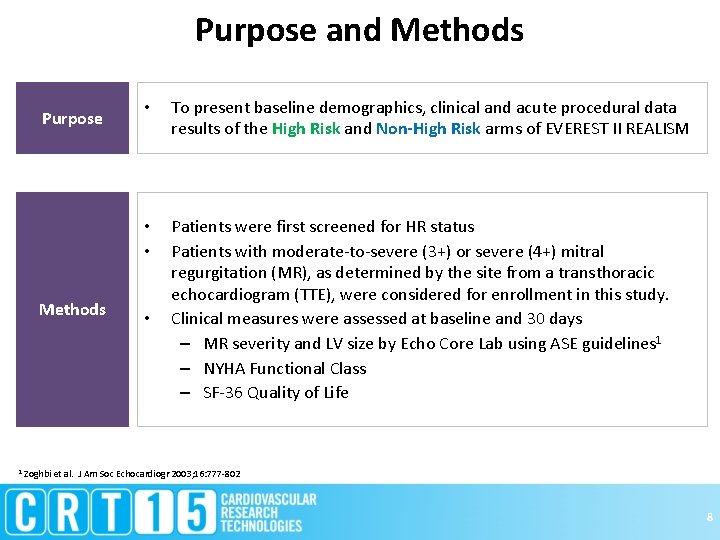
Purpose and Methods Purpose Methods 1 Zoghbi • To present baseline demographics, clinical and acute procedural data results of the High Risk and Non-High Risk arms of EVEREST II REALISM • • Patients were first screened for HR status Patients with moderate-to-severe (3+) or severe (4+) mitral regurgitation (MR), as determined by the site from a transthoracic echocardiogram (TTE), were considered for enrollment in this study. Clinical measures were assessed at baseline and 30 days – MR severity and LV size by Echo Core Lab using ASE guidelines 1 – NYHA Functional Class – SF-36 Quality of Life • et al. J Am Soc Echocardiogr 2003; 16: 777 -802 8
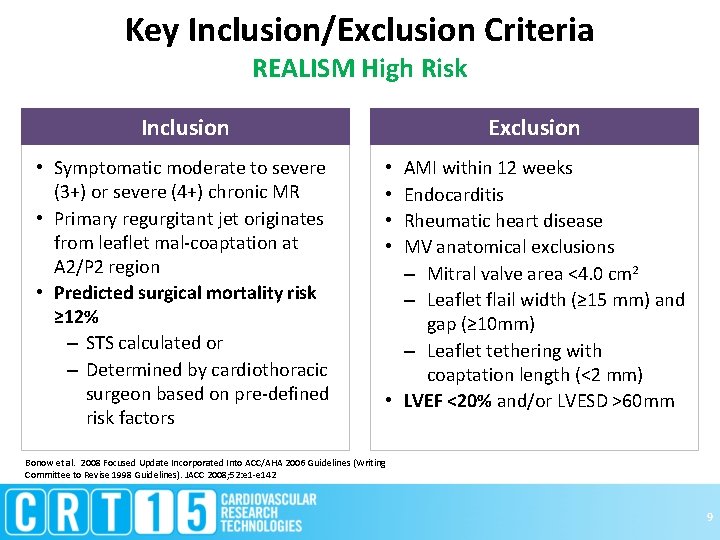
Key Inclusion/Exclusion Criteria REALISM High Risk Inclusion • Symptomatic moderate to severe (3+) or severe (4+) chronic MR • Primary regurgitant jet originates from leaflet mal-coaptation at A 2/P 2 region • Predicted surgical mortality risk ≥ 12% – STS calculated or – Determined by cardiothoracic surgeon based on pre-defined risk factors Exclusion AMI within 12 weeks Endocarditis Rheumatic heart disease MV anatomical exclusions – Mitral valve area <4. 0 cm 2 – Leaflet flail width (≥ 15 mm) and gap (≥ 10 mm) – Leaflet tethering with coaptation length (<2 mm) • LVEF <20% and/or LVESD >60 mm • • Bonow et al. 2008 Focused Update Incorporated Into ACC/AHA 2006 Guidelines (Writing Committee to Revise 1998 Guidelines). JACC 2008; 52: e 1 -e 142 9
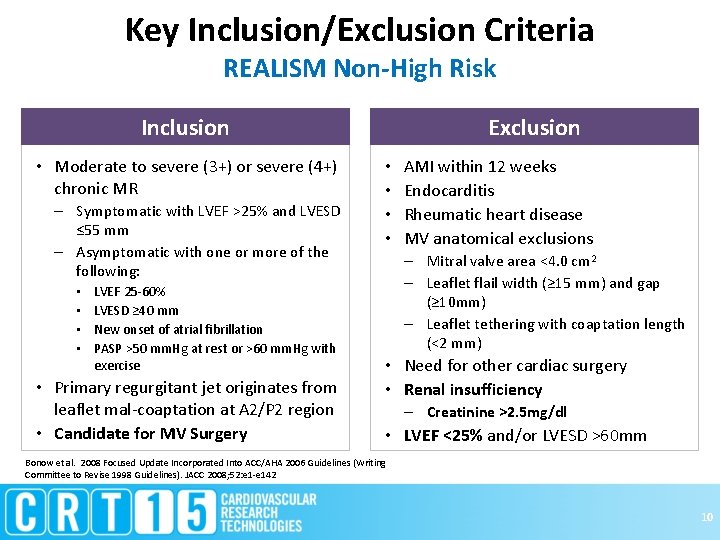
Key Inclusion/Exclusion Criteria REALISM Non-High Risk Inclusion • Moderate to severe (3+) or severe (4+) chronic MR – Symptomatic with LVEF >25% and LVESD ≤ 55 mm – Asymptomatic with one or more of the following: • • LVEF 25 -60% LVESD ≥ 40 mm New onset of atrial fibrillation PASP >50 mm. Hg at rest or >60 mm. Hg with exercise • Primary regurgitant jet originates from leaflet mal-coaptation at A 2/P 2 region • Candidate for MV Surgery Exclusion • • AMI within 12 weeks Endocarditis Rheumatic heart disease MV anatomical exclusions – Mitral valve area <4. 0 cm 2 – Leaflet flail width (≥ 15 mm) and gap (≥ 10 mm) – Leaflet tethering with coaptation length (<2 mm) • Need for other cardiac surgery • Renal insufficiency – Creatinine >2. 5 mg/dl • LVEF <25% and/or LVESD >60 mm Bonow et al. 2008 Focused Update Incorporated Into ACC/AHA 2006 Guidelines (Writing Committee to Revise 1998 Guidelines). JACC 2008; 52: e 1 -e 142 10
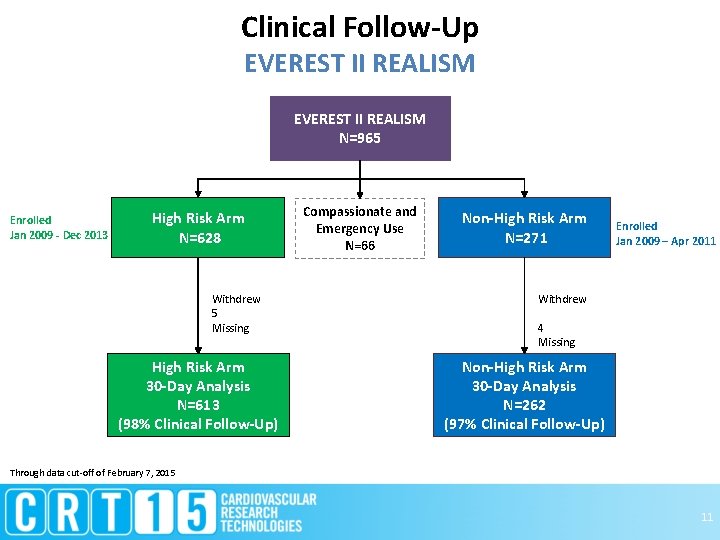
Clinical Follow-Up EVEREST II REALISM N=965 Enrolled Jan 2009 - Dec 2013 High Risk Arm N=628 Withdrew 5 Missing 10 High Risk Arm 30 -Day Analysis N=613 (98% Clinical Follow-Up) Compassionate and Emergency Use N=66 Non-High Risk Arm N=271 Enrolled Jan 2009 – Apr 2011 Withdrew 4 Missing Non-High Risk 5 Arm 30 -Day Analysis N=262 (97% Clinical Follow-Up) Through data cut-off of February 7, 2015 11
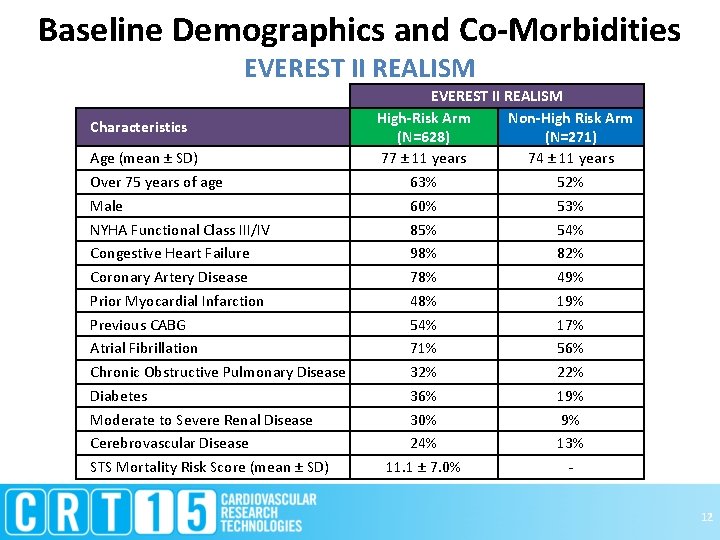
Baseline Demographics and Co-Morbidities EVEREST II REALISM Characteristics Age (mean ± SD) Over 75 years of age Male NYHA Functional Class III/IV Congestive Heart Failure Coronary Artery Disease Prior Myocardial Infarction Previous CABG Atrial Fibrillation Chronic Obstructive Pulmonary Disease Diabetes Moderate to Severe Renal Disease Cerebrovascular Disease STS Mortality Risk Score (mean ± SD) EVEREST II REALISM High-Risk Arm Non-High Risk Arm (N=628) (N=271) 77 ± 11 years 74 ± 11 years 63% 60% 85% 98% 78% 48% 54% 71% 32% 36% 30% 24% 11. 1 ± 7. 0% 52% 53% 54% 82% 49% 17% 56% 22% 19% 9% 13% 12
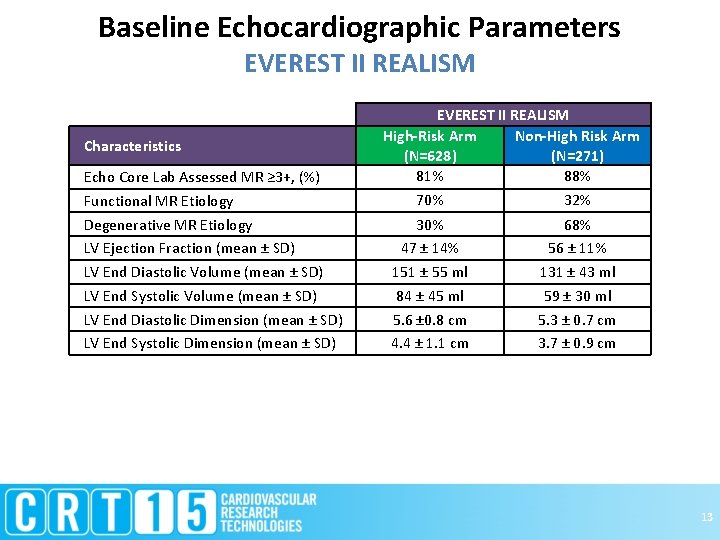
Baseline Echocardiographic Parameters EVEREST II REALISM Characteristics Echo Core Lab Assessed MR ≥ 3+, (%) Functional MR Etiology Degenerative MR Etiology LV Ejection Fraction (mean ± SD) LV End Diastolic Volume (mean ± SD) LV End Systolic Volume (mean ± SD) LV End Diastolic Dimension (mean ± SD) LV End Systolic Dimension (mean ± SD) EVEREST II REALISM High-Risk Arm Non-High Risk Arm (N=628) (N=271) 81% 88% 70% 32% 30% 47 ± 14% 151 ± 55 ml 84 ± 45 ml 5. 6 ± 0. 8 cm 4. 4 ± 1. 1 cm 68% 56 ± 11% 131 ± 43 ml 59 ± 30 ml 5. 3 ± 0. 7 cm 3. 7 ± 0. 9 cm 13
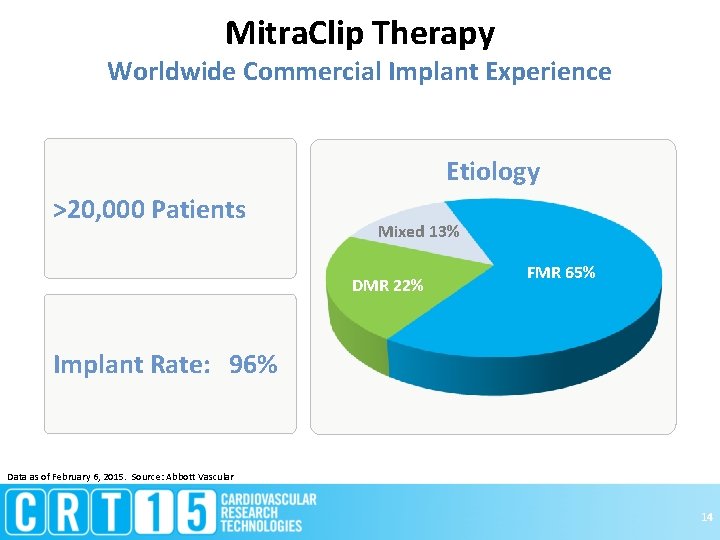
Mitra. Clip Therapy Worldwide Commercial Implant Experience Etiology >20, 000 Patients Mixed 13% DMR 22% FMR 65% Implant Rate: 96% Data as of February 6, 2015. Source: Abbott Vascular 14
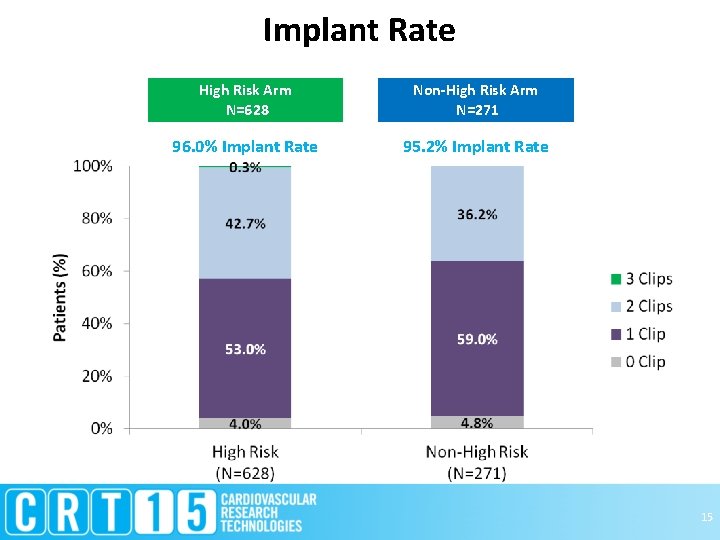
Implant Rate High Risk Arm N=628 Non-High Risk Arm N=271 96. 0% Implant Rate 95. 2% Implant Rate 15
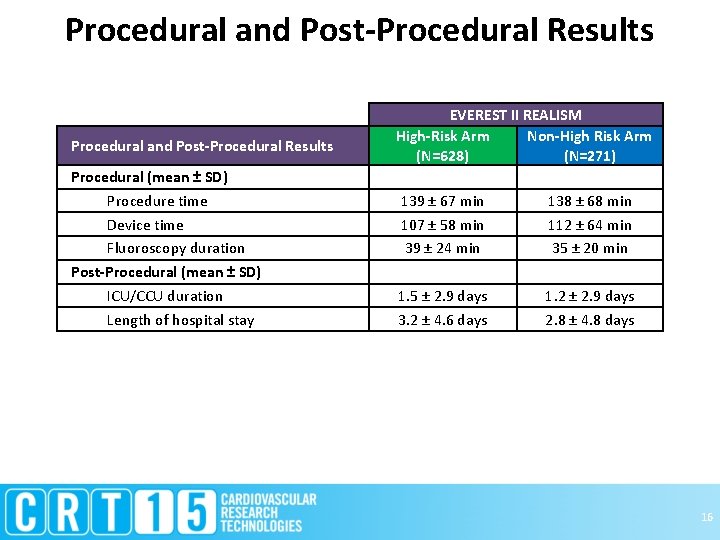
Procedural and Post-Procedural Results Procedural (mean ± SD) Procedure time Device time Fluoroscopy duration Post-Procedural (mean ± SD) ICU/CCU duration Length of hospital stay EVEREST II REALISM High-Risk Arm Non-High Risk Arm (N=628) (N=271) 139 ± 67 min 107 ± 58 min 39 ± 24 min 138 ± 68 min 112 ± 64 min 35 ± 20 min 1. 5 ± 2. 9 days 3. 2 ± 4. 6 days 1. 2 ± 2. 9 days 2. 8 ± 4. 8 days 16
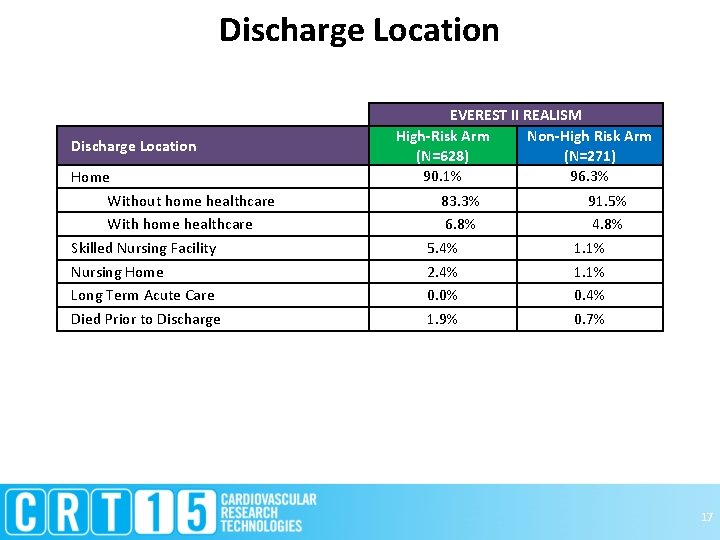
Discharge Location Home Without home healthcare With home healthcare Skilled Nursing Facility Nursing Home Long Term Acute Care Died Prior to Discharge EVEREST II REALISM High-Risk Arm Non-High Risk Arm (N=628) (N=271) 90. 1% 96. 3% 83. 3% 6. 8% 5. 4% 2. 4% 0. 0% 1. 9% 91. 5% 4. 8% 1. 1% 0. 4% 0. 7% 17
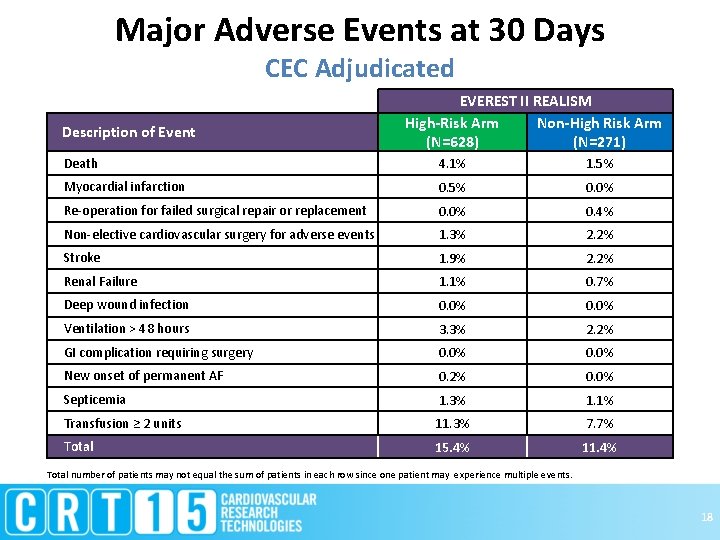
Major Adverse Events at 30 Days CEC Adjudicated Description of Event EVEREST II REALISM High-Risk Arm Non-High Risk Arm (N=628) (N=271) Death 4. 1% 1. 5% Myocardial infarction 0. 5% 0. 0% Re-operation for failed surgical repair or replacement 0. 0% 0. 4% Non-elective cardiovascular surgery for adverse events 1. 3% 2. 2% Stroke 1. 9% 2. 2% Renal Failure 1. 1% 0. 7% Deep wound infection 0. 0% Ventilation > 48 hours 3. 3% 2. 2% GI complication requiring surgery 0. 0% New onset of permanent AF 0. 2% 0. 0% Septicemia 1. 3% 1. 1% Transfusion ≥ 2 units 11. 3% 7. 7% Total 15. 4% 11. 4% Total number of patients may not equal the sum of patients in each row since one patient may experience multiple events. 18
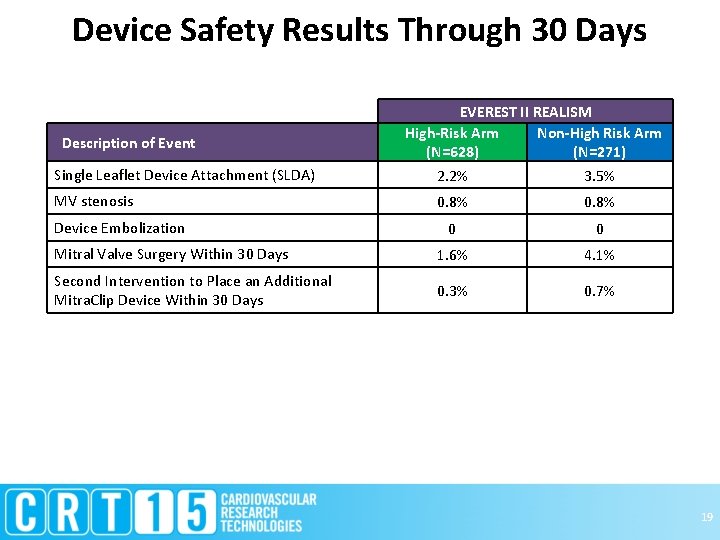
Device Safety Results Through 30 Days Description of Event Single Leaflet Device Attachment (SLDA) MV stenosis EVEREST II REALISM High-Risk Arm Non-High Risk Arm (N=628) (N=271) 2. 2% 3. 5% 0. 8% 0 0 Mitral Valve Surgery Within 30 Days 1. 6% 4. 1% Second Intervention to Place an Additional Mitra. Clip Device Within 30 Days 0. 3% 0. 7% Device Embolization 19
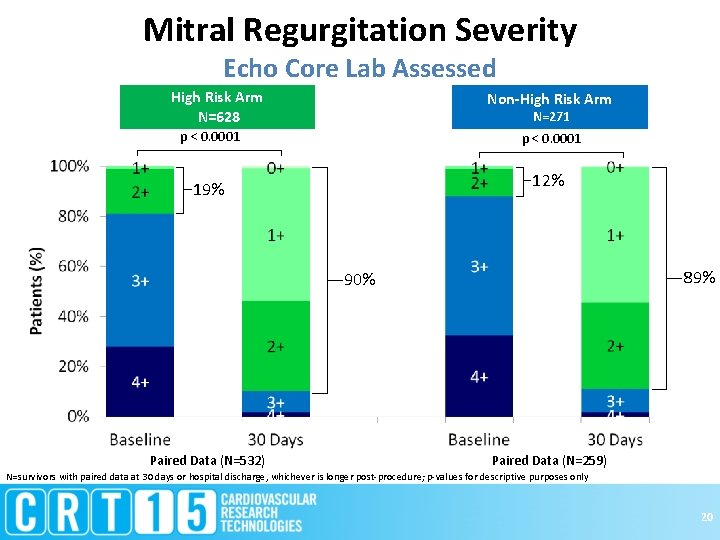
Mitral Regurgitation Severity Echo Core Lab Assessed High Risk Arm N=628 Non-High Risk Arm N=271 p < 0. 0001 12% 19% 89% 90% Paired Data (N=532) Paired Data (N=259) N=survivors with paired data at 30 days or hospital discharge, whichever is longer post-procedure; p-values for descriptive purposes only 20
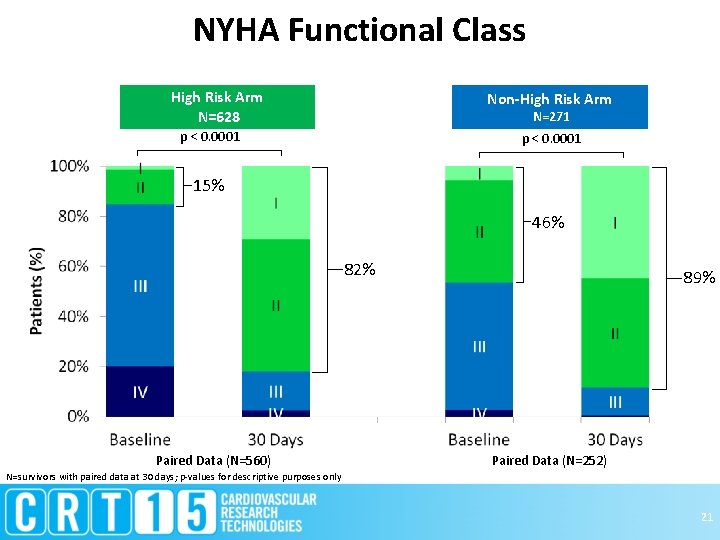
NYHA Functional Class High Risk Arm N=628 Non-High Risk Arm N=271 p < 0. 0001 15% 46% 82% Paired Data (N=560) 89% Paired Data (N=252) N=survivors with paired data at 30 days; p-values for descriptive purposes only 21
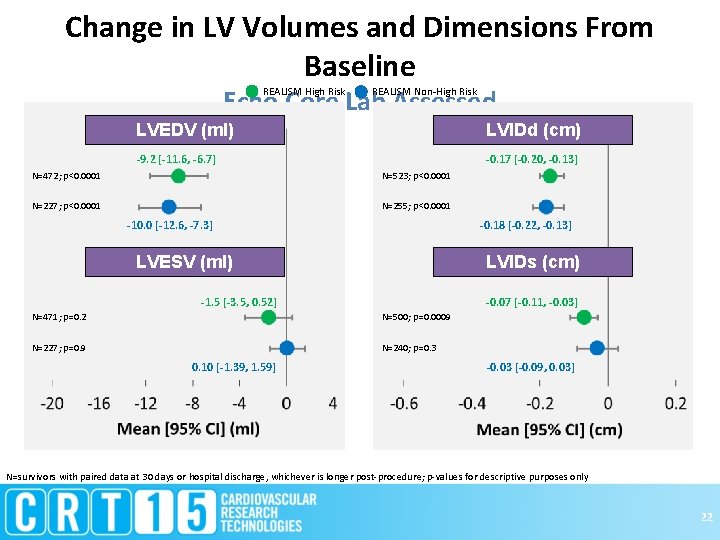
Change in LV Volumes and Dimensions From Baseline Echo Core Lab Assessed REALISM High Risk REALISM Non-High Risk LVEDV (ml) LVIDd (cm) -9. 2 [-11. 6, -6. 7] -0. 17 [-0. 20, -0. 13] N=472; p<0. 0001 N=523; p<0. 0001 N=227; p<0. 0001 N=255; p<0. 0001 -10. 0 [-12. 6, -7. 3] -0. 18 [-0. 22, -0. 13] LVESV (ml) LVIDs (cm) -1. 5 [-3. 5, 0. 52] -0. 07 [-0. 11, -0. 03] N=471; p=0. 2 N=500; p=0. 0009 N=227; p=0. 9 N=240; p=0. 3 0. 10 [-1. 39, 1. 59] -0. 03 [-0. 09, 0. 03] N=survivors with paired data at 30 days or hospital discharge, whichever is longer post-procedure; p-values for descriptive purposes only 22
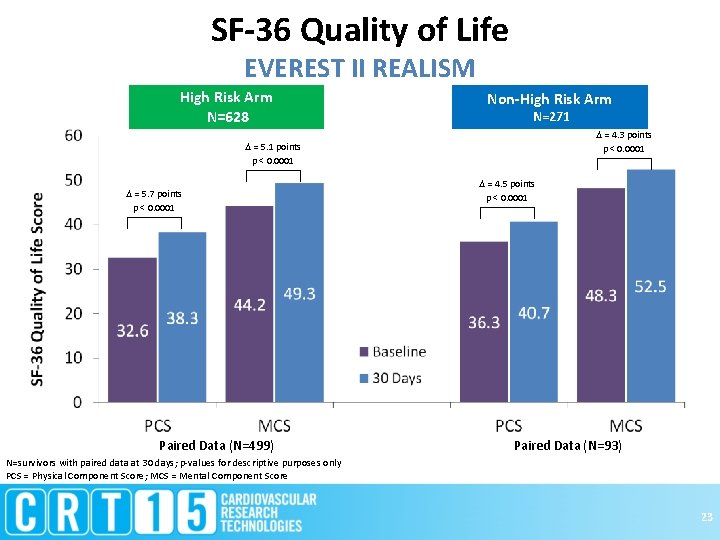
SF-36 Quality of Life EVEREST II REALISM High Risk Arm N=628 Non-High Risk Arm N=271 = 4. 3 points p < 0. 0001 = 5. 1 points p < 0. 0001 = 5. 7 points p < 0. 0001 Paired Data (N=499) = 4. 5 points p < 0. 0001 Paired Data (N=93) N=survivors with paired data at 30 days; p-values for descriptive purposes only PCS = Physical Component Score; MCS = Mental Component Score 23
Summary • The High Risk Arm of EVEREST II REALISM enrolled patients with more advanced age, more co-morbid conditions, and more frequent presence of functional MR than patients enrolled in the Non-High Risk Arm. • Despite baseline differences in risk status, US real world experience in both High Risk and Non-High Risk patients shows the Mitra. Clip procedure – Can be performed consistently with a high device implant rate (>95%) – Involves a short hospital stay (3 days) – Allows a large majority (90%) of patients to be discharged home • Totality of procedural and 30 -day data suggest improved functional and clinical outcomes – – MR reduction to ≤ 2+ in 89% of patients Improvements in NYHA Functional Class (84% Class I/II at 30 days) Reduction in LV dimensions and volumes Improvements in SF-36 Quality of Life measures 24
Limitations • While these results shed light on outcomes between different types of patients treated with the Mitra. Clip device for varying etiologies of mitral regurgitation, with and without increased surgical risk, • Analyses presented are – descriptive in nature and exploratory – not prospectively designed to detect differences in outcomes between High Risk and Non-High Risk arms 25
Conclusion • In real-world continued access use in the US, the Mitra. Clip procedure provides meaningful clinical benefits in select patients • Results in EVEREST II REALISM are consistent – In both high risk and standard risk patients – In FMR and DMR • EVEREST II REALISM reflects how the Mitra. Clip therapy has been adopted in patients with high surgical risk (70% with FMR), similar to global patterns of use where use in FMR predominates (65%). 26
Source: https://slidetodoc.com/everest-ii-realism-a-continued-access-study-to/
0 Response to "The Everest Ii Realism Continued Access"
Post a Comment